
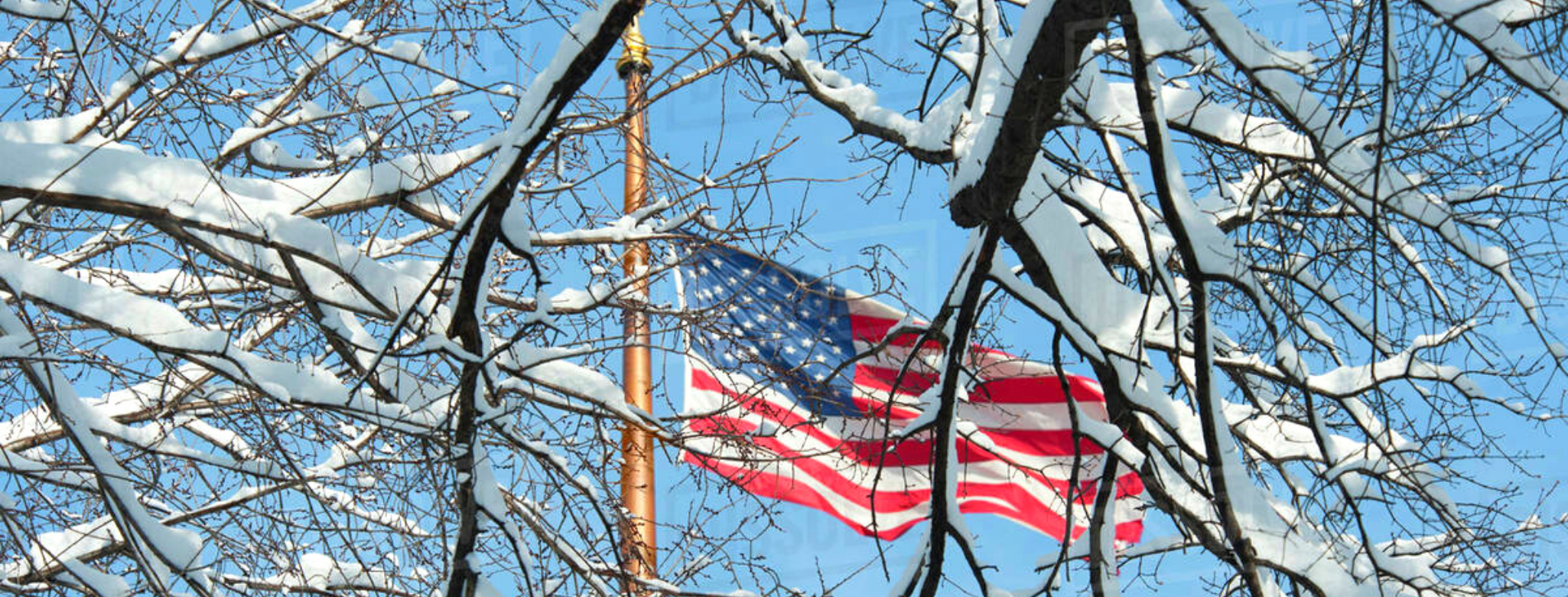
Preparing Your Flag For the Winter
Posted by Hayley Adams on Nov 20th 2025
As the cold weather sets in and winter approaches, you might be wondering if it's a good idea to keep your flag hanging outside, or if you should put it away for safekeeping during these winter months ahead. But after keeping Old Glory out all year, something just doesn't feel right about taking it down—and lucky for you, you don't have to!
Flag maintenance is easy when done right. Here are some ways to protect your flag and flagpole from the moisture, ice, snow, and most other things that the frosty weather can bring.
Choice of Flag Material
Although there are many options when it comes to flag material, if you're worried about inclement weather, we recommend you purchase one of our nylon flags. While different materials are suited for different environments, the nylon flag is often referred to as the "all weather flag" and is the perfect choice for winter.
Unlike cotton (the material most other flags are made of), nylon doesn't absorb moisture, making it withstand the harsher weather that occurs during the winter time. So, in case there's a snowstorm or if it rains, your flag is safe. The moisture will not damage the fabric and you don't have to worry about the colors bleeding or fading.
Take Your Flag Down During Extreme Conditions
While nylon, or all weather flags, are safe to fly druing the winter months, if you want to maximize your flag's longevity, it's always a good idea to take your flag down when extreme weather is expected.
Make sure to check the weather forecast regularly, and in case there's a snowstorm, heavy ice, or high winds coming, pull your flag down and store it away. High winds can be especially damaging to flags, putting stress on both the fabric and stitching.
Inspect and Maintain Your Flagpole
During winters, it's often the flagpoles that need to be looked at rather than the flag. Unlike the flag itself, you can't move the flagpole and severe storms may cause some damage. The cold weather and air can cause the halyard rope to dry-rot and fray, so be sure to check the parts regularly, in case they need to be replaced.
If you need to clean your flagpole after a storm, a neat trick to cleaning the whole flagpole is to wrap cloth around the flagpole and attach it to the halyard of the pole. Then raise the halyard all the way up. This way, the cloth will clean the flagpole without you having to climb up a ladder and risking getting injured.
Wash Your Flag
Good news—nylon flags are really easy to wash. If it does happen to get dirty after a storm, be sure to hand wash it with warm water and a mild detergent. Best practices are letting it hang dry and to not wash it too often. Too much washing could cause the colors to bleed together.
A good rule of thumb would be once a month if needed, and always remove any dirt, debris, or road salt that can accumulate during winter storms.
Consider Flag Rotation
If you fly your flag 24/7, consider having a few flags on hand and rotating them throughout the season. This allows each flag to rest and extends the life of all your flags. Plus, you'll always have a backup if you need repairs or replacement.
In Conclusion
Taking care of your flag doesn't have to be difficult. Using these tips can help you keep your flag safe during this winter season. We care about your products and will be happy to help answer any questions you have about protecting your flag or help you find the right products.
Visit our website, shoot us an email, or give us a call at Eagle Mountain Flag and Flagpole!