





Product Description
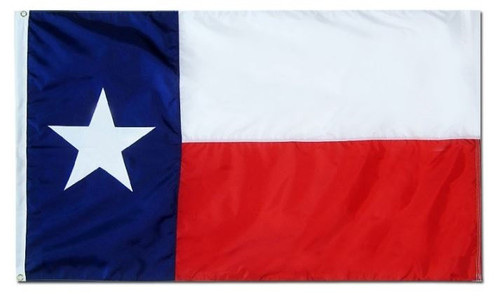
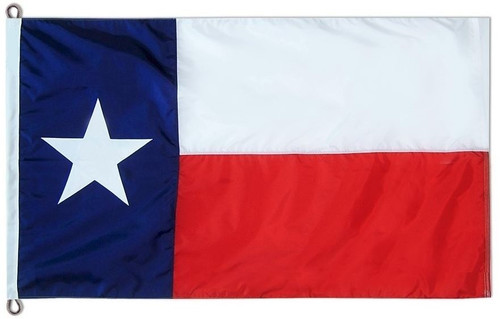
Introducing our Outdoor Texas Flags - a symbol of pride, resilience, and the spirit of freedom. Immerse yourself in the rich history and heritage of the Texas Flag while proudly displaying it outdoors. Crafted with precision and dedication, our flags are a testament to quality and patriotism.
History of the Texas Flag
Many federalists in Mexico and Texas were angered with the evermore growing centralist Mexican government. Tensions came to a breaking point in October 1835 with Gonzales. In the early 1830’s Mexico had given a small cannon to the citizens of Gonzales to protect themselves from Indian attacks at the time, but after a Mexican solider bludgeoned a Gonzales resident, Mexican authorities felt that it was unwise to leave the settlers with a weapon. A small detachment of troops was sent to retrieve the cannon but were escorted out of Gonzales by the settlers, without the cannon. 100 Dragoons were sent with Lieutenant Francisco de Castañeda to demand compliance from the settlers. Texians stalled negotiations with Castañeda for several days as they waited for reinforcements. October 2nd, about 140 Texians volunteers attacked Castañeda early in the morning. After a brief skirmish, Castañeda requested a meeting with John Henry Moore to express his federalist views. After the meeting as Moore was returning to camp, Texians raised the homemade flag that we all know and love. Realizing his dragoons were outnumbered as well as outgunned Castañeda led his troops back to Béxar. After Castañeda left, Stephen F. Austin was unanimously elected as the leader of the Volunteers, also known as the Army of the People.
On October 6th, Texians in Matagorda marched on Presidio La Bahía in Goliad. 4 days later they stormed the presidio in a battle that lasted 30 minutes. By November 3rd, the Texian army controlled the Gulf Coast, forcing Mexican commanders to send all communications overland. This left General Martín Perfecto de Cos unable to quickly request and receive reinforcements of supplies. While Texians were supervising the Gulf Coast, Austin was marching towards Béxar to engage General Cos and his troops. Mexican troops quickly built barricades throughout the town, several days later the Texian army descended on the town, initiating the Siege of Béxar. After taking Béxar, an advance party led by James Bowie and James Fannin’s men chose to camp at Mission Concepción and sent for the rest of the Texian army. Mexican troops led by Colonel Domingo de Ugartechea engaged in battle with Bowie and Fannin’s men after learning that the Texian army was temporarily divided. The Mexican cavalry was unable to fight effectively due to insufficient weaponry and difficult terrain. After 3 unsuccessful attacks on the Texians, Ugartechea called for a retreat. In mid-December Cos withdrew Mexican troops into a mission outside of Béxar, Alamo Mission. Later he had to surrender his position to the Texian army, Cos’ terms of surrender were to leave Texas and no longer fight supporters of the Constitution of 1824. After Cos’ surrender there was no longer a Mexican garrison in Texas and many Texians believed that the war was over.
On February 17th 1836, Santa Anna’s forces entered Texas. Santa Anna led his men up the Camino Real towards Béxar, the political center of Texas. Despite the low temperatures the Mexican troop continued moving, some died from hypothermia, others contracted dysentery. Many soldiers that fell behind due to exhaustion or illness were killed by Comanche raiding parties. Nevertheless, the Mexican forces kept marching towards Béxar; as they progressed, they ransacked and occasionally burnt vacant houses down as most of the settlers had evacuated northward. Santa Anna’s network of Tejano spies helped him learn the Texians locations, strengths, and plans.
Wide Variety of Sizes
Our collection features a diverse range of sizes to meet your specific requirements. They range from 12" X 18" to 30' X 60'.
Premium Materials for Durability and Longevity
Choose from a selection of high-quality materials, each crafted to withstand the elements and maintain its vibrant colors:
- Nylon: Our Nylon fabric goes by many names: Durawavez, Endura-Nylon, Perm-Nyl, or simply Nylon. Made from Heavy-Duty Commercial Grade Dupont Solarmax material with Sunscreen, this is the best nylon on the market, featuring an embroidered star (appliqued on flags larger than 8’ x 12’). Perfect for outdoor use, the 200-denier fabric ensures excellent flyability in light breezes (approximately 5-6 MPH), while durable lock stitching extends the flag's life far beyond printed or chain-stitched options. The quick-drying properties of nylon enhance color retention, keeping the flag vibrant for longer. Typical life of our nylon flags is between 8-10 months before tattering or fading.
All of our flags are Made in America!
Texas Flag - Nylon Specification Sheet