270 Words That Shaped a Nation: The Gettysburg Address
Posted by Hayley Adams on Nov 12th 2026
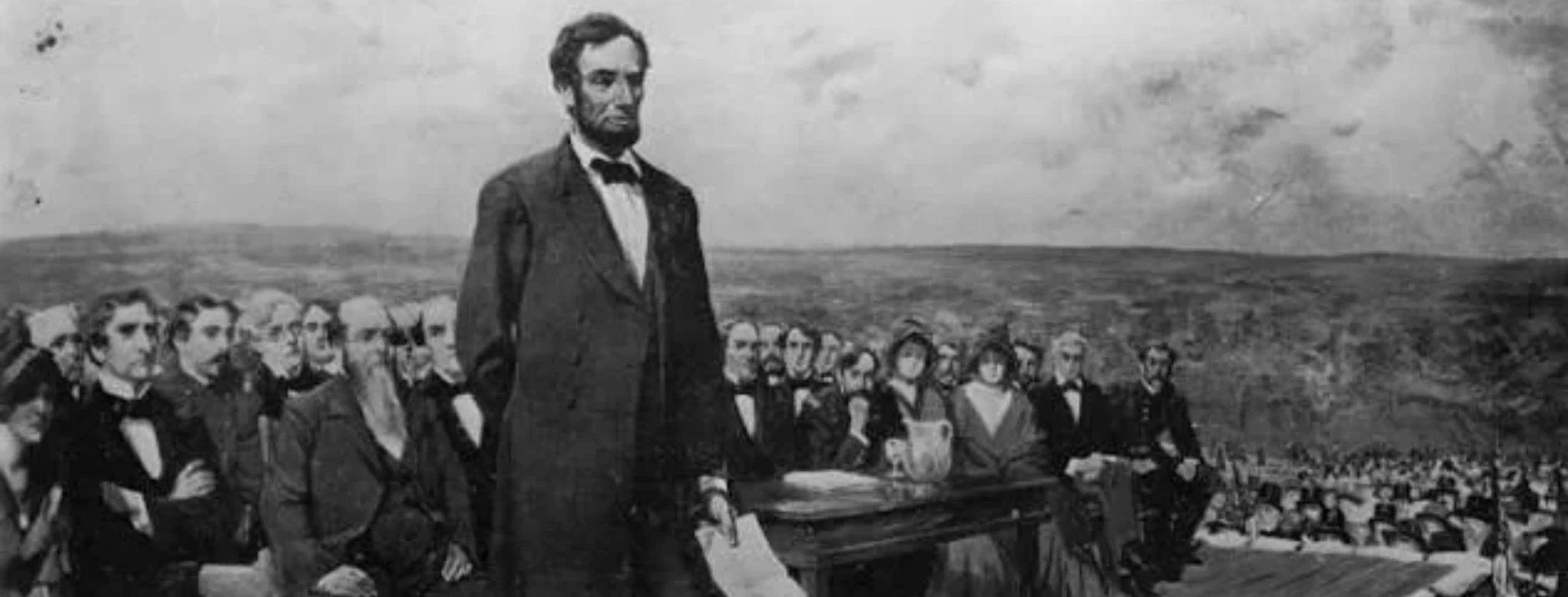
On November 19th, 1863, a crowd gathered in a quiet Pennsylvania field to dedicate a new cemetery for soldiers who had died in one of the war's bloodiest battles. The president was invited to say "a few appropriate remarks." What he delivered, 163 years ago, became one of the most famous speeches in American history.
Why Everyone Was There
The Battle of Gettysburg had been fought just months earlier, in early July 1863, and left thousands of soldiers dead. The Soldiers' National Cemetery was created to give them a proper resting place, and the dedication ceremony drew a large crowd. The main speaker that day wasn't Abraham Lincoln. It was Edward Everett, one of the most celebrated speakers of the era, who spoke for about two hours.
Two Minutes at the Podium
Lincoln followed with a speech of only about 270 words, delivered in roughly two minutes. Many in the crowd were reportedly unsure it had even begun before it was over. But in those few sentences, he reframed the war as more than a fight to preserve the Union. He described it as a test of whether a nation built on equality and freedom could endure, and he closed with a call to ensure that "government of the people, by the people, for the people" would not disappear.
How the War Changed the Flag
While the Address never mentions the flag, the Civil War years are when the Stars and Stripes became a symbol Americans displayed in everyday life. After the attack on Fort Sumter in 1861, flags went up on homes, shops, and town squares across the North as a public sign of support for the Union. By November 1863, the flag carried 35 stars, with West Virginia's added that summer. Lincoln's words gave that Union a purpose beyond holding the country together, and over time the flag came to stand for the ideals he described, not just the government itself. In the same year, Lincoln also proclaimed a national day of Thanksgiving, which helps explain why this anniversary falls so close to the holiday we celebrate today.
A Short Speech With a Long Reach
It's tempting to think of famous speeches as long and grand. The Gettysburg Address is the opposite, and that's part of why it's remembered. Its words are still read at memorials, recited in classrooms, and quoted in moments of national reflection. If you fly a flag on November 19th, it's a good chance to pause and take the two minutes to read it.