
History You Didn't Know: The Flag That Wouldn't Quit
Posted by Hayley Adams on Sep 17th 2026
This week, 213 years ago, one of the most famous phrases in American naval history was stitched onto a battle flag and carried into one of the most decisive fights of the War of 1812.
A Dying Order
During the Battle of Lake Erie on September 10, 1813, Captain James Lawrence lay severly wounded on his own ship, the USS Chesapeake, in an earlier battle that same year. As he died, he gave one final order to his crew: "Don't give up the ship." Though Lawrence's own battle ended in defeat, his words didn't die with him.
Perry's Flag
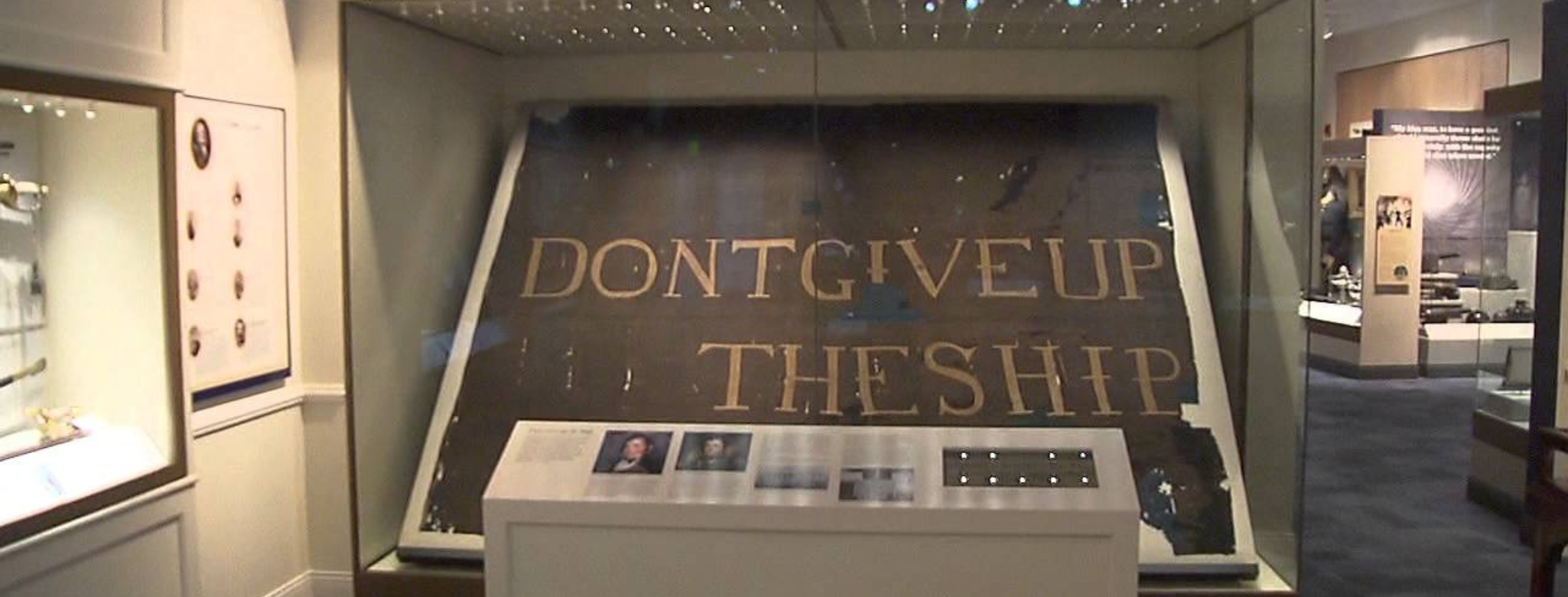
Comandor Oliver Hazard Perry, a friend of Lawrence's, had those words stitched in bold letters onto a blue battle flag before heading into the Battle of Lake Erie. As Perry's flagship came under heavy fire and was eventually disabled, he famously rowed himself through gunfire to a second ship, carrying the flag with him, and continued the fight until the entire British fleet on Lake Erie surrendered.
A Battle That Changed the War
The victory at Lake Erie gave the United States control of the lake for the rest of the war, a turning point that secured the Northwest frontier and forced British forces to retreat from Detroit. Perry's after-action report became just as famous as the flag itself: "We have met the enemy and they are ours."
The Flag Today
The original "Don't Give Up the Ship" flag survived the battle and is preserved today at the U.S. Naval Academy Museum in Annapolis, Maryland. It remains one of the most recognized flags in American naval history, and its phrase has been adopted informally by the Navy ever since as a symbol of persistence under fire.
Why It's Worth Remembering
It's easy to think of flags as symbols carried after a fight is won, but Perry's flag was part of the fight itself, a phrase from a dying friend, carried through cannon fire, that helped turn the tide of a battle few Americans learn about today. It's a reminder that some of the most meaningful flags in our history were flown not to celebrate victory, but to refuse defeat.