


THIRD KOREAN WINTER 1952-1953 Battle Streamer | USAF Korea
$73.20 - $87.84
- SKU:
- BS-AF072


Product Description
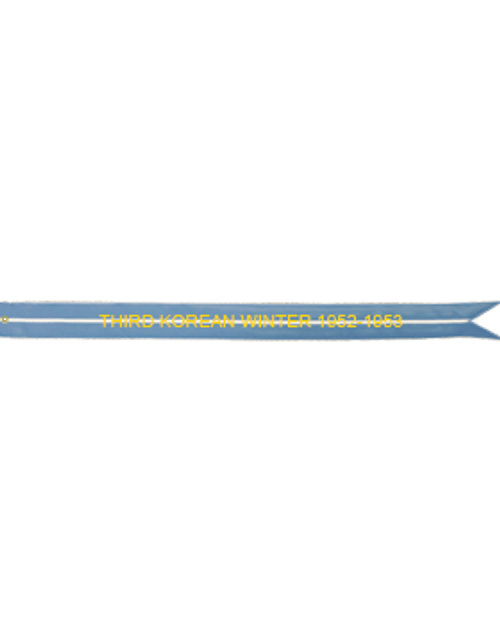
Introducing the US Air Force Battle Streamer for the Korean Service Campaign, proudly bearing the inscription THIRD KOREAN WINTER 1952-1953. This distinguished streamer stands as a testament to the unwavering courage, sacrifice, and resilience displayed by the United States Air Force during this pivotal chapter in history. Whether you are a dedicated aviation enthusiast, a military veteran, or a proud American, this Battle Streamer is an essential addition to your collection. Available in three lengths – 2 foot, 3 foot, and 4 foot – our US Air Force Battle Streamer is a versatile and meaningful way to commemorate the heroic endeavors of the Korean Service. Here's why you'll want to make this piece a part of your memorabilia:
Key Features:
- Premium Quality: Meticulously crafted with precision and attention to detail, our Battle Streamer is composed of durable, high-quality materials that ensure a lasting display, preserving the historical significance of the Korean Service.
- Three Length Options: Choose from three convenient lengths – 2 foot, 3 foot, and 4 foot – allowing you to tailor your display to fit your space, whether it be at home, in the office, or as part of a comprehensive military collection.
- Easy Display: Equipped with brass grommets, each streamer is designed for effortless hanging on walls, flagpoles, or within shadow boxes. It provides a hassle-free and distinguished presentation.
- Versatile Decor: The Battle Streamer is a versatile addition to various settings, from military ceremonies and historical reenactments to classrooms and museums. It serves as a powerful conversation starter, offering insights into the pivotal role played by the Air Force in the Korean Service.
- Educational Value: Utilize this Battle Streamer as a valuable teaching tool, engaging students, family members, and friends in discussions about the significance of the Korean Service.
- Thoughtful Gift: Share the legacy of the Air Force's heroic contributions with loved ones. This Battle Streamer makes a meaningful gift for veterans, history enthusiasts, and anyone who appreciates the rich tapestry of American military history.
History of the THIRD KOREAN WINTER 1952-1953 Battle Streamer
During the winter of 1952-1953, a military stalemate persisted in the Korean War. Allied Sabrejet pilots continued to excel against MiGs, but the Communists developed an ambush tactic along the Yalu River. F-86 pilots, running low on fuel, faced challenges, with some having to bail out over Cho-do Island. The UN forces held the island and maintained an air rescue detachment. Sabre pilots altered routes to avoid combat while low on fuel. Despite being outnumbered, UN pilots relied on skill for aerial victories. Notably, a battle on February 18, 1953, saw 4 F-86Fs defeating 48 MiGs.
While the Fifth Air Force maintained daylight air superiority over North Korea, the Bomber Command faced challenges on nighttime missions. B-29s, relying on darkness and electronic jamming, encountered effective Communist interceptors. B-29 losses led to compressed formations, fighter escorts, and restrictions on missions during clear nights. Despite these challenges, the Fifth Air Force, Navy, and Marines collaborated on successful attacks. The Eighth Army adjusted its bombline closer to the front lines, allowing for more targeted strikes. In spring 1953, the Fifth Air Force intensified attacks on enemy transportation, hindering Communist forces' movement of supplies and reinforcements.
By the end of March 1953, the Chinese Communist government expressed willingness to discuss a cease-fire in Korea. In April, POW exchanges began, marking a diplomatic shift in the conflict.