Before the Stars and Stripes: Flags of the Founding Fathers' Era
Posted by Hayley Adams on Jul 30th 2026
When we picture Revolutionary America, the Stars and Stripes often comes to mind first, but that flag wasn't adopted by Congress until June 1777, well after fighting had already begun. In the years before it, a handful of other flags carried the colonies' cause into battle, each with its own story.
The Grand Union Flag
Raised by George Washington's Continental Army in January 1776, the Grand Union Flag is often considered America's first national flag. It combined thirteen red and white stripes, representing the colonies, with the British Union Jack in the canton, a design that reflected where the colonies stood at that moment: united in resistance, but not yet fully committed to independence. It flew over Washington's camp outside Boston nearly a full year before the Declaration was signed.
The Gadsden Flag
Fiercer and more famous today, the Gadsden Flag features a coiled rattlesnake on a bright yellow field with the warning "Don't Tread on Me." Designed by South Carolina statesman Christopher Gadsden in 1775, it drew on Benjamin Franklin's earlier use of the rattlesnake as a symbol of colonial unity and resolve, Franklin had famously described rattlesnakes as never attacking without warning and never backing down once provoked. The flag flew on Continental Navy ships, including the flagship of the Navy's first commodore, and became one of the most recognizable protest symbols of the era, a role it still plays today.
The Bennington Flag
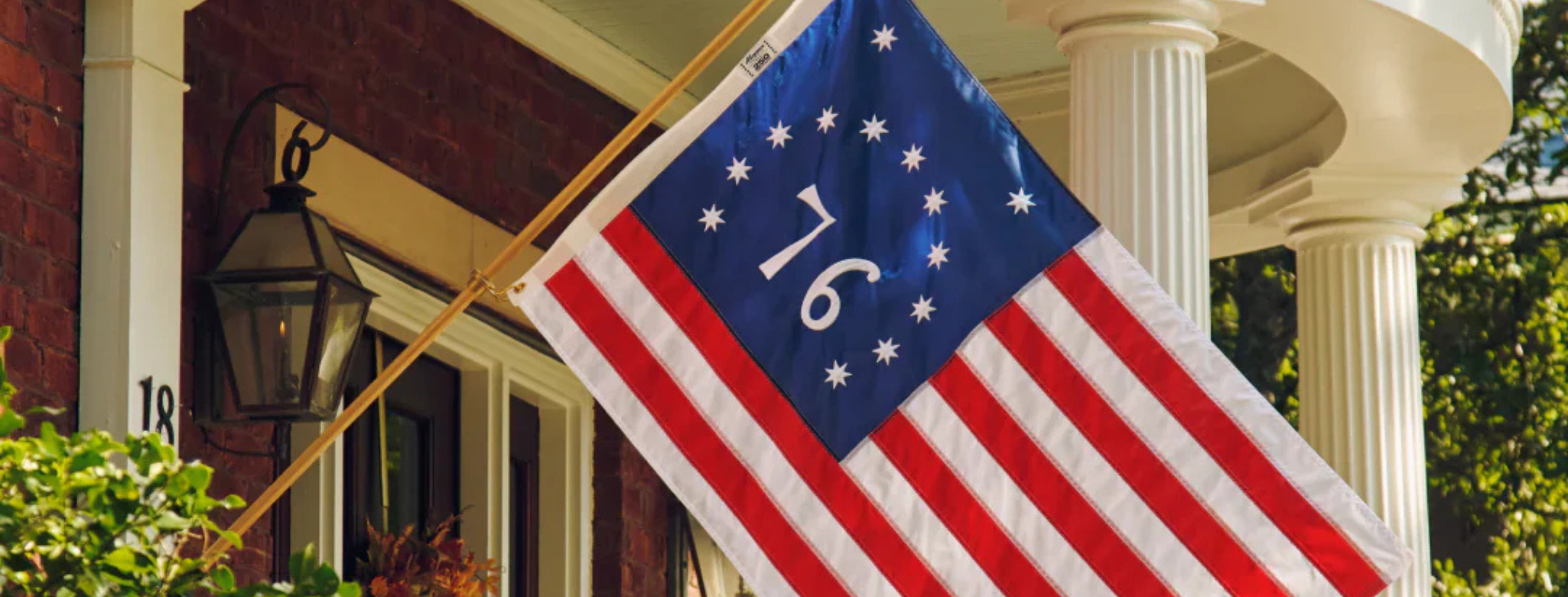
Named for its ties to the 1777 Battle of Bennington, the Bennington Flag is a variation on the Stars and Stripes with a few distinctive touches: seven-pointed stars instead of the usual five, and a large "76" nod to the year independence was declared. Historians still debate exactly when it was made, some evidence points to a later anniversary celebration rather than the battle itself, but it's long been associated with Vermont militia and the broader spirit of the Green Mountain Boys. The original now hangs in the Bennington Museum in Vermont.
Why It Matters
None of these flags looked like the one we fly today, and that's the point, the Stars and Stripes didn't appear fully formed. It grew out of a handful of homemade, regional, and deeply symbolic banners, each reflecting a different piece of the colonies' fight for identity. The next time you raise the flag, it's worth remembering it stands on the shoulders of a rattlesnake, a union jack, and a hand-stitched "76."