History You Didn't Know: The Code That Was Never Broken
Posted by Hayley Adams on Aug 13th 2026
Every August 14th, National Navajo Code Talkers Day honors one of the most remarkable and also least-known chapters of American military history, a code that helped win the war in the Pacific and was never broken by the enemy.
A Code Built on a Language
In 1942, a small group of Navajo Marines developed a code based on their native language, which at the time had no written form and was spoken fluently by almost no one outside the Navajo Nation. Words for military terms were built from Navajo vocabulary, a fighter plane became "hummingbird," a submarine became "iron fish", creating a code that combined the complexity of an unfamiliar language with an entirely new layer of military vocabulary on top of it.
Faster and Unbroken
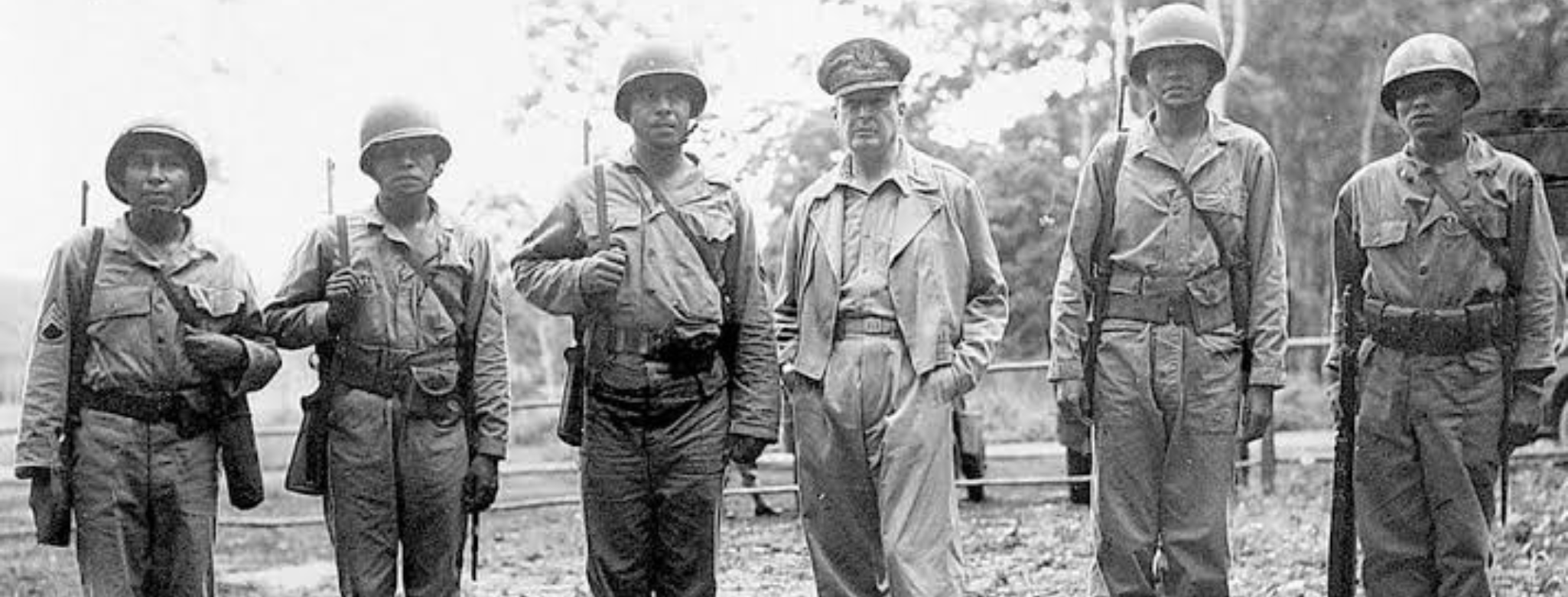
The original 29 Code Talkers eventually grew to around 400 Navajo Marines who served throughout the Pacific theater, at many battles. Their code could transmit and translate a message in under 20 seconds, compared to the 30 minutes older encryption machines often required, while remaining completely unbroken by Japanese cryptographers throughout the entire war.
A Long Wait for Recognition
Because the program remained classified until 1968, the Code Talkers received no public recognition for decades after the war ended. It wasn't until 2001 that the original 29 were awarded the Congressional Gold Medal, with later Code Talkers receiving the Congressional Silver Medal. Many had passed away by the time that recognition came.
Marking the Day
There's no official flag protocol tied to August 14th, but it's a meaningful day to fly the American flag with a bit of extra intention, or alongside a Navajo Nation flag if you're able to. It's also a good day to simply share the story, the Code Talkers' history isn't widely taught, and their contribution is easy to overlook next to more familiar WWII narratives.
Their service is a reminder that some of the war's most decisive advantages came not from weapons or tactics, but from language, culture, and trust, a code the enemy never came close to cracking.