
National Airborne Day and the Airborne Insignia
Posted by Hayley Adams on Aug 6th 2026
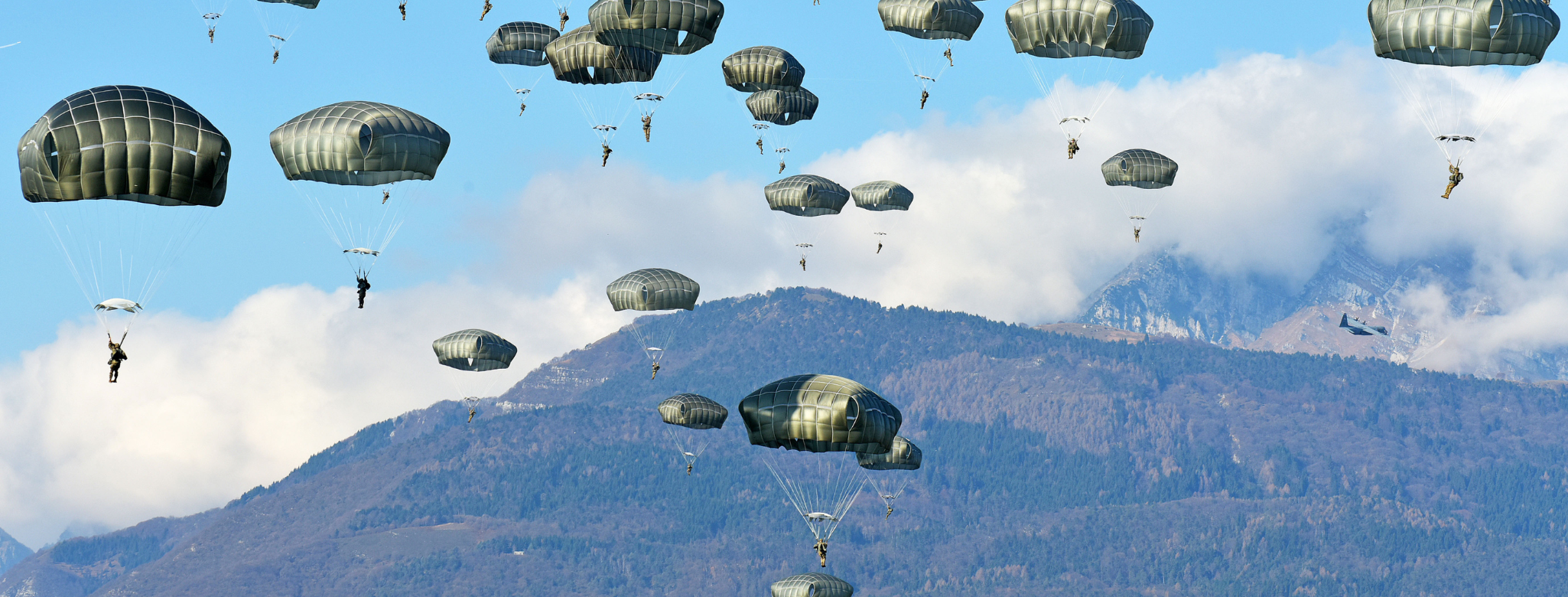
Every August 16th, National Airborne Day honors the U.S. Army's paratroopers and glider troops, which are soldiers trained to jump straight into the fight. The date marks the anniversary of the Army's first official parachute test jump in 1940, a moment that changed how American forces would go to war.
From Test Jump to Combat Force
That first 1940 jump at Fort Benning in Georgia, led to the formation of the Army's first Parachute Test Platoon and, eventually, full airborne divisions. By World War II, airborne troops were dropping behind enemy lines in some of the war's most crucial fights, including the D-Day invasion, where paratroopers landed hours ahead of the main force to secure key positions before morning.
The Insignia Behind the Wings
The parachutist badge, often called "jump wings", was officially adopted in 1941 and remains one of the most recognizable insignia in the Army today. Its design features a parachute canopy flanked by two wings, symbolizing flight and the courage it takes to leap from a plane into contested ground. Different levels of the badge mark a soldier's number of qualifying jumps, with small stars added to senior and master badges to denote combat jumps.
The Flag People Actually Fly
There's no single flag issued by Congress for National Airborne Day itself, but there is a widely recognized "Airborne flag" that veterans and active-duty families fly to mark the occasion. It typically features the jump wings insignia, the silver parachute-and-wings badge that is usually displayed large and centered on a plain field, often navy, with "AIRBORNE" lettered above or below it.
However, it's not uncommon for paratroopers to instead choose their own division's flag: the 82nd Airborne's "All American" flag or the 101st Airborne's "Screaming Eagle" flag are two of the most commonly flown, each carrying its division's own insignia rather than the generic jump wings design.
Marking the Day
There's no federal half-staff order tied to Airborne Day, but it's a fitting occasion to fly the flag with pride, especially if you know a paratrooper, past or present. Some communities near airborne bases hold jump demonstrations or small ceremonies on that day to recognize all the brave men and women.
From a single test jump in 1940 to a badge worn by generations of soldiers, the airborne insignia tells a story of a force built to go first, land hard, and hold their ground until help arrived.