


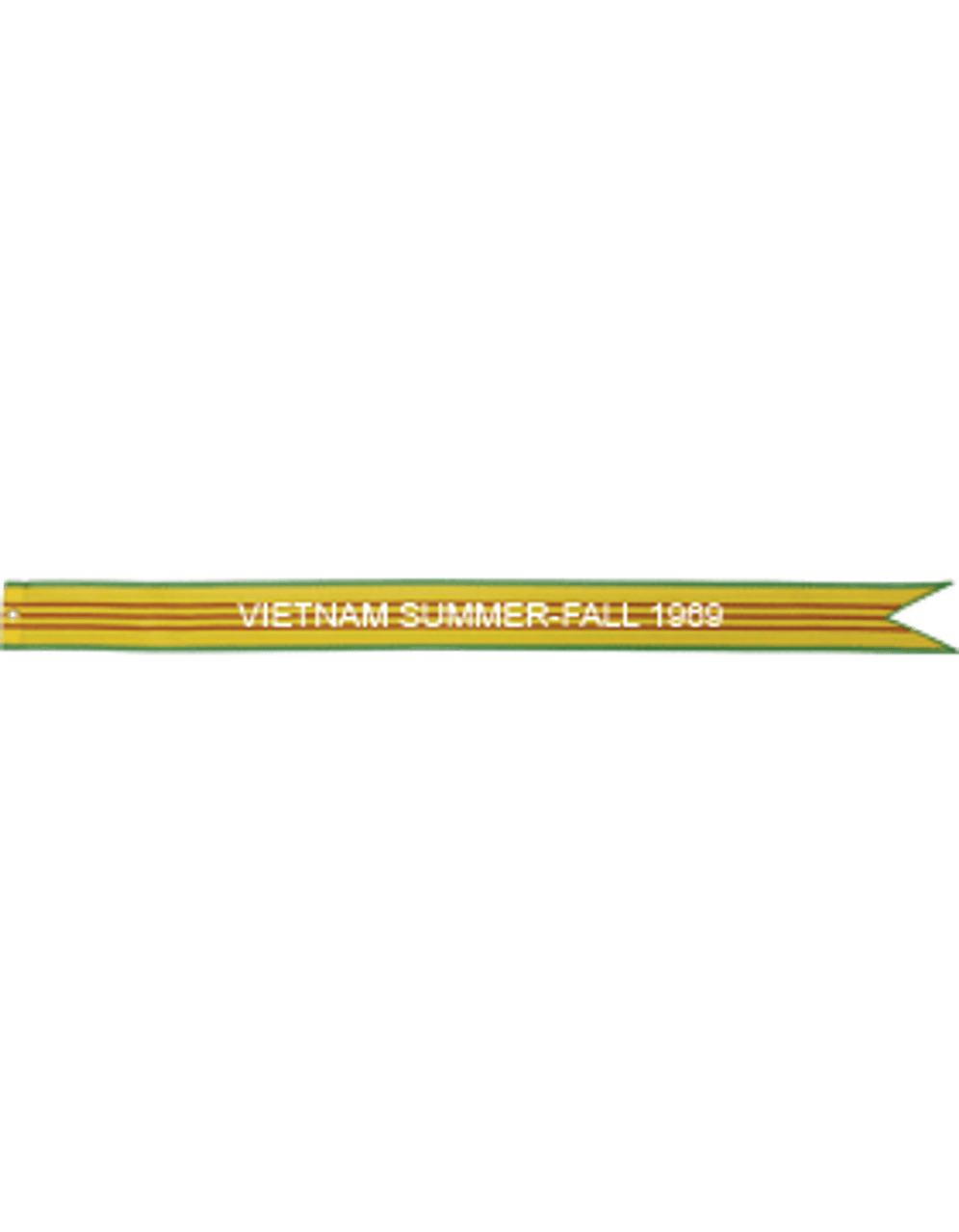
TET 69/COUNTEROFFENSIVE 1969 Battle Streamer | USAF Vietnam
$73.20 - $87.84
- SKU:
- BS-AF083



Product Description
Introducing the US Air Force Battle Streamer for the Vietnam Service, proudly bearing the inscription TET 69/COUNTEROFFENSIVE 1969. This distinguished streamer stands as a testament to the unwavering courage, sacrifice, and resilience displayed by the United States Air Force during this pivotal chapter in history. Whether you are a dedicated aviation enthusiast, a military veteran, or a proud American, this Battle Streamer is an essential addition to your collection. Available in three lengths – 2 foot, 3 foot, and 4 foot – our US Air Force Battle Streamer is a versatile and meaningful way to commemorate the heroic endeavors of the Vietnam Service. Here's why you'll want to make this piece a part of your memorabilia:
Key Features:
- Premium Quality: Meticulously crafted with precision and attention to detail, our Battle Streamer is composed of durable, high-quality materials that ensure a lasting display, preserving the historical significance of the Vietnam Service.
- Three Length Options: Choose from three convenient lengths – 2 foot, 3 foot, and 4 foot – allowing you to tailor your display to fit your space, whether it be at home, in the office, or as part of a comprehensive military collection.
- Easy Display: Equipped with brass grommets, each streamer is designed for effortless hanging on walls, flagpoles, or within shadow boxes. It provides a hassle-free and distinguished presentation.
- Versatile Decor: The Battle Streamer is a versatile addition to various settings, from military ceremonies and historical reenactments to classrooms and museums. It serves as a powerful conversation starter, offering insights into the pivotal role played by the Air Force in the Vietnam Service.
- Educational Value: Utilize this Battle Streamer as a valuable teaching tool, engaging students, family members, and friends in discussions about the significance of the Vietnam Service.
- Thoughtful Gift: Share the legacy of the Air Force's heroic contributions with loved ones. This Battle Streamer makes a meaningful gift for veterans, history enthusiasts, and anyone who appreciates the rich tapestry of American military history.
History of the TET 69/COUNTEROFFENSIVE 1969 Battle Streamer
In 1969, the Vietnam War saw significant events unfold. The Viet Cong and North Vietnamese initiated mortar and rocket attacks across key locations in South Vietnam, employing hit-and-run tactics. Despite initial success, Allied forces countered the attacks, leading to the enemy's withdrawal into Cambodian and Laotian sanctuaries. A second phase of assaults occurred in May, including a notable battle in the A Shau Valley. The U.S. Army captured Ap Bia Mountain, enabling Allied aircraft to land safely. Concurrently, the USAF played a crucial role in close air support and interdiction campaigns, such as COMMANDO HUNT I, along South Vietnam's borders with Laos and Cambodia. In Laos, air operations targeted the Ho Chi Minh Trail. AC-130 gunships proved effective, claiming a significant percentage of damaged or destroyed trucks. The conflict extended into northeastern Laos, where AC-47 gunships supported Royal Laotian and irregular forces. The U.S. expanded its involvement with B-52 night attacks on Communist sanctuaries in Cambodia. Amidst these actions, there were preparations for the withdrawal of American forces from South Vietnam, marked by President Nixon's announcement to withdraw 25,000 troops in July and August 1969. This decision occurred despite limited progress in the Paris peace talks.